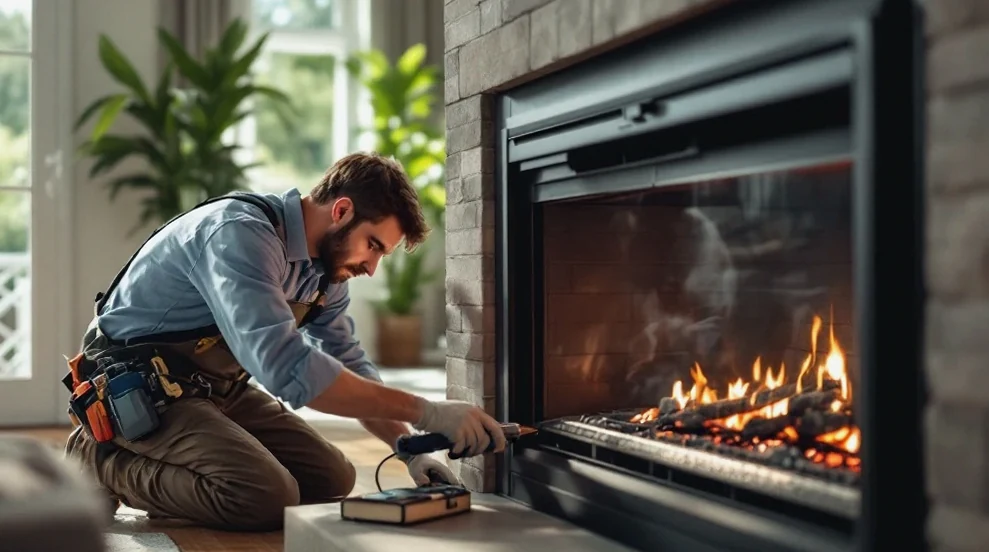
What is Gas Fireplace Tune-Up and how does it work?
A gas fireplace tune-up is a thorough inspection and cleaning of your unit's burner, pilot, logs, and venting, plus a safety check for gas leaks and carbon monoxide. It's like a yearly physical for your fireplace, catching small problems before they become expensive repairs.
Think of a tune-up as the difference between changing your car's oil and waiting for the engine to seize. We pull the glass off, vacuum out the burner compartment, brush the logs, check the pilot assembly, and verify the thermopile is putting out the right millivolts. Then we test the gas pressure at the manifold and inspect the vent for blockages or rust. It takes about an hour for a standard unit, longer if you've got a complicated multi-sided fireplace or one that hasn't been touched in years.
Most Huntsville homes have either a vented gas log set or a direct-vent fireplace. They work differently, but both need the same basic attention. Vented logs draw air from the room and send combustion gases up a chimney; direct-vent units pull air from outside and exhaust through a sealed pipe. Either way, dust and spider webs accumulate, thermocouples weaken, and gas valves get sticky. A tune-up addresses all of that.
We also do a visual check of the firebox for cracks or discoloration, which can signal overheating. And we test the carbon monoxide detector if you have one nearby, because a fireplace that burns clean should never set it off. If it does, we find out why before we leave.
The cost for this kind of service in Huntsville typically lands between $150 and $500, depending on what your unit needs. (gasfireplacerepairhuntsville.com) A standard tune-up with no parts usually sits at the lower end, but if we find a worn igniter or a bad gasket, the price climbs. The only way to know for sure is to have us look at it, and we'll give you a straight quote before any work starts.
- Cleaning the burner, logs, and glass
- Testing the pilot light, thermocouple, and thermopile
- Checking gas pressure and inspecting for leaks
- Verifying venting and air intake are clear
- Testing safety valves and carbon monoxide detectors
Short version
- A tune-up keeps your fireplace burning clean and safe.
- Catch small issues before they become $500 repairs.
- Do it yearly, ideally before the first cold snap.
- Typical Huntsville cost: $150 to $500. (gasfireplacerepairhuntsville.com)
How Gas Fireplace Tune-Up works, start to finish
We start by shutting off the gas and letting the unit cool, then remove the glass and clean every component. We inspect the ignition system, test safety controls, verify venting, and finish with a full operational test. You get a report on what we found and what we fixed.
The first step is always safety. We close the gas valve at the unit and at the main supply if needed, then wait for the firebox to cool down. That's not just for our comfort; a hot burner can crack when hit with cold air or a wet rag. Once it's cool, we pull the glass panels and set them aside for cleaning.
Next we vacuum out the burner compartment. You'd be surprised what collects in there: pet hair, dust bunnies, even a stray pine needle from last Christmas. That debris can clog the burner ports and cause uneven flames or sooting. We brush the logs with a soft brush to remove dust without disturbing their placement, because a misaligned log can block the flame and create carbon buildup.
The ignition system gets a close look. If you have a standing pilot, we check the flame color and height, then clean the pilot orifice if it's yellow or lazy. For electronic ignition units, we test the spark and the flame sensor. We also measure the thermopile output with a multimeter; a weak thermopile is the most common reason a fireplace won't stay lit, and it's a cheap part if caught early.
Gas pressure is next. We hook up a manometer at the manifold and compare the reading to the spec on the nameplate. Low pressure can cause flames to flutter or go out; high pressure can damage the logs and create soot. If the pressure is off, we adjust the regulator or call the gas company if the problem is upstream.
We inspect the venting system, whether it's a chimney flue or a direct-vent pipe. For direct-vent, we check the termination cap outside for blockages like leaves or wasp nests, and verify the gaskets and seals are intact. For vented logs, we make sure the damper is open and the flue is clear enough to see daylight. A blocked vent is a serious carbon monoxide risk, so we always check it.
Finally, we clean the glass with a ceramic-safe cleaner, reassemble everything, and run the unit through a full cycle: on, off, and on again. We watch the flame pattern, check for any gas odor, and confirm the safety valve shuts down if the pilot goes out. Then we hand you a checklist of what we did and what we recommend for the future.
A tune-up usually takes 60 to 90 minutes. If we find a part that needs replacing, we'll quote you the price before we swap it. Most parts like thermocouples, igniters, and gas valves are in stock or available within a day or two.
If you've never had a tune-up, the first one may take longer and cost more. Older units often need extra cleaning or minor repairs. But the cost is still less than a mid-winter no-heat emergency, and you'll know exactly what you're dealing with.
Our crew has serviced fireplaces across Huntsville, from the new builds in Hampton Cove to the older homes in Five Points. The process is the same, but the quirks differ. Older units might have corrosion in the burner tray; newer ones might have electronic controls that need firmware updates. We handle both.
- Shut off gas and cool down.We close the valve and wait for the unit to cool so nothing cracks and no gas flows during cleaning.
- Clean burner and logs.Vacuum out debris, brush logs, and clear burner ports so the flame burns evenly.
- Test ignition and safety controls.Check pilot, thermocouple, thermopile, and spark, and verify the safety valve trips properly.
- Inspect venting and gas pressure.Measure manifold pressure, clear any blockages, and confirm the vent path is open and sealed.
- Run a full cycle and report.Light the unit, watch the flame, check for leaks, and give you a clear summary of the work.
Why Gas Fireplace Tune-Up matters for your home
A yearly tune-up keeps your fireplace safe, efficient, and reliable. It prevents carbon monoxide leaks, reduces your gas bill, and prevents the frustration of a fireplace that won't light on the coldest night of the year.
Safety is the biggest reason. A gas fireplace that burns improperly can produce carbon monoxide, and a blocked vent can push it into your living room. That's not a scare tactic; it's an outcome we've seen. We've pulled chimney caps plugged with leaves and direct-vent pipes filled with mud dauber nests. A tune-up catches those before you light the first fire of the season.
Efficiency matters. A clean burner and properly adjusted gas pressure mean the flame burns hotter and uses less gas. You might not notice a 5% difference on your monthly bill, but over a winter it adds up. And a fireplace that's tuned correctly heats the room better, so you rely less on your furnace.
Reliability is the part homeowners care about most. There's nothing worse than inviting people over for a holiday gathering and having the fireplace refuse to light. Most no-light issues trace back to a weak thermopile or a dirty pilot, both of which a tune-up addresses. It's a $20 part and an hour of labor versus a cold living room and a rushed service call on Christmas Eve.
A tune-up also extends the life of your fireplace. Gas valves and burners last decades if they're maintained, but they wear out faster when they're running dirty or at the wrong pressure. Replacing a burner assembly costs far more than a yearly service.
If you have a warranty on your fireplace, most manufacturers require annual service to keep it valid. Missing tune-ups can void coverage on a $3,000 unit. That's a good reason to keep the paperwork and call us once a year.
Huntsville's humidity and clay dust can be hard on fireplaces. The red clay that gets tracked in and the pollen that coats everything in spring can find its way into your burner. We see it every year. A tune-up clears all that out.
We recommend scheduling in late summer or early fall, before the first cold snap. Our calendar fills up fast in November, and you don't want to be waiting for an appointment when the temperature drops. A tune-up in September means you're ready for the first chilly evening.
Some folks think they can go a year without a check if the fireplace looks clean. But the pilot light and venting wear out silently. You can't see a weak thermopile or a cracked gasket. That's why the yearly check matters, even when everything looks fine.
Yellow flame or soot buildup
A healthy flame is blue with a small yellow tip. If you see a tall yellow flame or black soot on the logs, that's incomplete combustion. Book a tune-up soon.
Pilot light goes out often
A weak thermocouple or a draft issue can cause the pilot to die. It's not an emergency, but it will get worse. Schedule a tune-up within a few weeks.
Gas smell or black stains near the unit
Any odor of gas or soot staining on the wall or glass means a leak or a venting problem. Shut off the fireplace and call us right away.
Common problems and what causes them
The most common issues we see in Huntsville are pilot lights that won't stay lit, flames that are too yellow or too small, and gas odor. Each has a specific cause, and most are easy to fix during a tune-up.
Pilot light problems usually come down to a dirty pilot orifice or a failing thermocouple. The thermocouple is a small copper rod that senses the pilot flame and tells the gas valve to stay open. When it wears out or gets coated with carbon, it doesn't generate enough millivolts, and the valve shuts off. That's a $20 part and a 20-minute fix during a tune-up.
A yellow, lazy flame is a sign of incomplete combustion. It can be caused by dust on the burner ports, a misaligned log, or low gas pressure. We clean the ports and adjust the logs, then measure the pressure. If the pressure is off, we adjust the regulator or call the gas company if the problem is upstream.
Small flames that barely heat the room are usually a gas pressure issue or a partially clogged burner. Sometimes it's as simple as a spider web in the venturi tube. We clean that out and the flame returns to full height. This is a common issue in Huntsville because of our warm summers; spiders love dark, quiet fireboxes.
Gas odor is the scariest and the rarest. It can be a leak at a fitting, a pilot that's blowing out, or a backdraft from a blocked vent. We always use a gas sniffer to check every joint, and we soap-test fittings to find even the smallest leak. If we find one, we tighten or replace the fitting and retest. We never leave a unit with any detectable gas smell.
Sooting on the glass is another frequent call. That's usually from a dirty burner or logs that are placed too close to the glass. We clean the glass and reposition the logs according to the manufacturer's diagram. If sooting persists, we check the venting and gas pressure.
Electronic ignition units have their own quirks. A dead battery in the remote or a faulty spark igniter can prevent startup. We test the spark and check the battery contacts. Sometimes it's just a loose wire. A tune-up covers all of that.
Older fireplaces, especially those from the 1990s and early 2000s, often have worn gaskets on the glass door. A bad gasket lets air in, which can cause draft issues and reduce efficiency. We replace those during a tune-up if needed.
If you have a vented log set in a masonry chimney, the damper can rust shut or the flue can accumulate creosote if you've ever burned wood in it. We check the damper operation and recommend a chimney sweep if there's buildup. That's a separate service, but we can point you to a good sweep.
The best way to avoid these problems is to use your fireplace regularly, but not constantly. A fire that runs for hours every day wears out parts faster. And always wait for the unit to cool before you clean the glass or touch anything. But even with good habits, parts wear out. That's why yearly tune-ups are worth it.
No matter what issue you're seeing, a tune-up is the first step. We'll diagnose the cause and give you a clear recommendation. If it's a simple fix, we handle it on the spot. If it's a bigger repair, we'll quote you the cost and you can decide. Most tune-ups end with just a cleaning and a clean bill of health.
- Pilot won't stay lit: dirty orifice or weak thermocouple
- Yellow flame: dust, misaligned logs, or low gas pressure
- Small flame: clogged burner or venturi tube
- Gas smell: leak at a fitting or blocked vent
- Soot on glass: dirty burner or logs too close to glass
A $20 thermocouple caught during a tune-up beats a $200 emergency service call on Christmas Eve.
Frequently Asked Questions
How often should I get a gas fireplace tune-up?
Once a year is the standard recommendation from every manufacturer we work with. If you use your fireplace heavily, like every night in winter, a tune-up every six months is a good idea. Annual service keeps the warranty valid and catches wear before it becomes a breakdown.
Can I do a gas fireplace tune-up myself?
You can clean the glass and vacuum around the burner, but we don't recommend going further. Gas valves, pilot assemblies, and venting are safety-critical systems. A mistake can cause a gas leak or carbon monoxide hazard. Our tune-up includes testing and calibration that requires specialized tools and training.
How much does a gas fireplace tune-up cost in Huntsville?
Most tune-ups in Huntsville range from $150 to $500, depending on the condition of your unit and whether parts are needed. (gasfireplacerepairhuntsville.com) A standard cleaning and inspection with no parts usually lands at the lower end. We give you a firm quote before any work starts.
What are the signs my gas fireplace needs a tune-up?
Look for a yellow flame instead of blue, soot on the glass, a pilot that goes out often, or any gas smell. Also, if the fireplace takes longer to light or doesn't heat the room like it used to, it's time for a tune-up. Don't wait for it to stop working entirely.
Does a tune-up include cleaning the chimney?
No, a tune-up is for the gas unit itself. We inspect the venting and flue for blockages, but we don't sweep chimneys. If you have a vented log set in a masonry chimney, we recommend having a chimney sweep clean it every few years, especially if you've ever burned wood.
Can a tune-up fix a fireplace that won't light?
Often, yes. Most no-light issues are caused by a dirty pilot, a weak thermocouple, or a dead battery in an electronic ignition. These are all things we check and fix during a tune-up. If the problem is a faulty gas valve or a wiring issue, we'll diagnose it and quote the repair.
Is it safe to use my gas fireplace before a tune-up?
If you see a yellow flame, soot, or smell gas, shut it off and call us. Otherwise, it's probably fine to use for a short time, but we recommend scheduling a tune-up soon. A fireplace that's running dirty is less efficient and could be producing carbon monoxide, so don't delay.
How long does a gas fireplace tune-up take?
A standard tune-up takes about 60 to 90 minutes. If we find parts that need replacing or extra cleaning, it could take longer. We'll let you know upfront if there's anything that will add time.
Do you offer tune-up packages or discounts for multiple fireplaces?
We give a discount when we service more than one fireplace in the same home. Call us for a quote and we'll work out a fair price. Some homes in Huntsville have both a fireplace and a gas log set, and we can handle both in one visit.
What should I do between tune-ups to keep my fireplace in good shape?
Keep the glass clean and avoid touching the logs. Make sure the area around the fireplace is clear of clutter. If you have a remote, replace the batteries yearly. And if you hear any unusual noises or smell gas, shut it off and call us right away.
Sources
Need gas fireplace repair in Huntsville? Get a free estimate today.
📞 256-524-0557