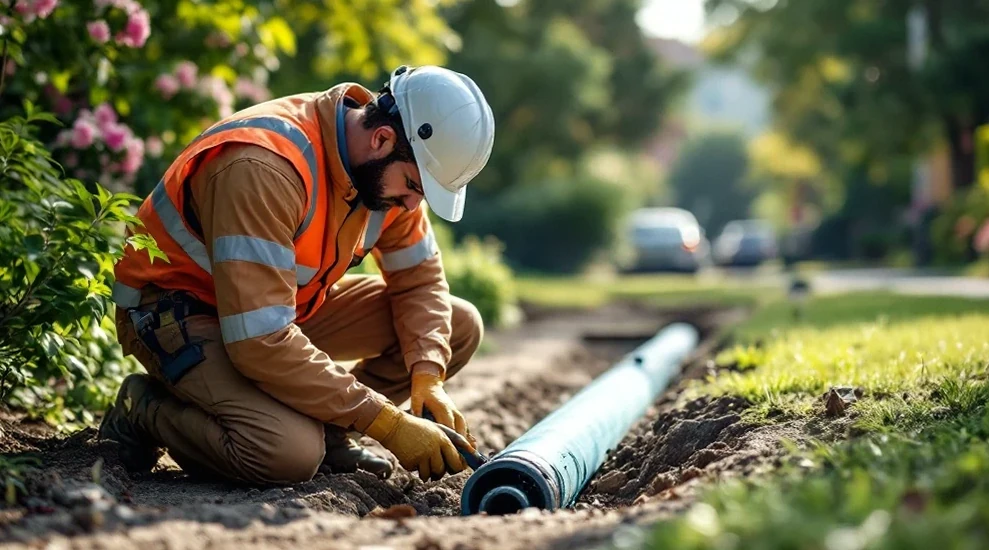
What is Gas Line Inspection and how does it work?
Gas line inspection is a full check of the gas supply line running to your fireplace, from the main shutoff valve to the burner. We pressurize the line, check every joint with a leak detector, and verify the connection is safe. It catches small leaks before they become dangerous.
Think of it as a physical exam for the pipe that feeds your fire. The line runs from your gas meter or a manifold, often through a wall or under the floor, and ends at the fireplace's gas valve. Over time, fittings can loosen, corrosion can set in, or a line can get nicked during other work. An inspection finds those issues while they're still cheap to fix.
We use a digital manometer to pressurize the line and watch for a drop, then go joint by joint with a handheld leak detector. That detector sniffs out even tiny amounts of gas. We also check the shutoff valve, the flex connector, and the burner orifice. If something's off, we flag it and tell you exactly what it means.
For a typical fireplace, the whole inspection takes about 45 minutes. We leave you with a clear pass or a list of what needs attention. No guesswork, no vague 'might be okay' answers.
Short version
- We pressurize the line and check every joint for leaks.
- Inspection covers the valve, flex connector, and burner orifice.
- You get a clear pass/fail and a written list of any issues.
- Typical cost to fix a gas line runs $150 to $750, depending on damage and location.
How Gas Line Inspection works, start to finish
We start by shutting off the gas at the fireplace's shutoff valve, then connect a pressure gauge. We pressurize the line to a set level and watch for any drop over a few minutes. Then we walk the entire line with a leak detector, checking every fitting, valve, and connection.
First, we look at the visible line. That means opening the fireplace's lower panel and checking the flex connector, the shutoff valve, and the pipe that enters the unit. We're looking for rust, cracks, or signs that something has been rubbing against the line. A worn flex connector is a common find in older homes.
Next comes the pressure test. We attach a manometer to the line and pressurize it to about 10 to 12 inches of water column. If the pressure holds steady for five minutes, the line is sealed. If it drops, we know there's a leak somewhere, and we start hunting with the electronic detector.
The detector is a wand that beeps when it senses gas. We run it along every joint, every thread, and every valve. It's the same tool we use for emergency leak calls, and it's sensitive enough to catch a pinhole leak you'd never smell.
We also check the burner itself. That means pulling the logs and looking at the burner ports for blockages or corrosion. A clogged port can cause a yellow flame, which is a sign of incomplete combustion. That's not a gas line leak, but it's the same safety issue.
Finally, we check the venting. For a direct-vent fireplace, we confirm the vent pipe is sealed and clear. For a natural vent, we make sure the flue is open and unobstructed. A blocked vent can push carbon monoxide back into your living room, which is why we always do this step.
Once we're done, we give you a written report. If everything passes, you're good to go. If not, we explain what's wrong, how urgent it is, and what it'll take to fix it. You're never left guessing.
- Shut off the gas.We close the fireplace's shutoff valve so the line is isolated from the main supply.
- Pressurize the line.A manometer is connected, and the line is pressurized to a set level.
- Watch for pressure drop.If the gauge holds steady for five minutes, the line is sealed. A drop means a leak.
- Sniff out leaks.An electronic detector checks every joint, fitting, and valve for gas.
- Check the burner and vent.We inspect the burner ports and venting to catch combustion issues.
- Deliver the report.You get a written pass/fail and a clear explanation of any problems.
Why Gas Line Inspection matters for your home
A gas leak is not something you want to discover by smell. Even a small leak can waste gas, cause soot buildup, or, in a confined space, create a fire hazard. An inspection catches these issues early, when the fix is simple and cheap.
Most homeowners never think about their gas line until something goes wrong. But gas lines don't last forever. The flex connector that attaches your fireplace to the hard pipe has a rubber core that degrades over time. The fittings can loosen as your house settles. Rodents can chew through a line in a crawl space. All of these are silent problems until they're not.
There's also the carbon monoxide angle. A gas leak isn't just a fire risk; it's a health risk. Carbon monoxide is odorless, colorless, and can cause headaches, dizziness, and worse. If your fireplace burns inefficiently because of a gas issue, it can produce more CO. An inspection checks for that too.
Then there's the money side. Fixing a small leak early might cost $150 to $750, depending on the damage and location. (supremeservicetoday.com) But if you ignore it and the leak gets worse, you could be looking at a much bigger repair, or worse, a dangerous situation. The math is simple: a $150 inspection is a lot cheaper than a $750 repair, and both are cheaper than a house fire.
We've also seen cases where a homeowner sells their house, and the buyer's inspector finds a gas line issue that kills the deal. A pre-listing inspection can save you that headache. It's a small step that protects your home's value.
Finally, there's the factor of knowing for sure. We're not going to pretend that's not a benefit. When you light your fireplace in December, you shouldn't have to wonder if that faint smell is normal. It's not. An inspection gives you a straight answer.
No symptoms, but it's been years
If you can't remember the last time your gas line was checked, schedule an inspection. It's cheap and quick.
You smell gas near the fireplace
That's not normal. Shut off the fireplace, open a window, and call us today. We'll find the leak.
Strong gas odor or hissing sound
Leave the house, call the gas company from outside, and then call us. Don't flip any switches.
Common problems and what causes them
The most common issues we find are loose fittings, corroded flex connectors, and blockages in the burner or vent. Each has a specific cause, and each is fixable if caught early.
Loose fittings are the number one culprit. Gas lines are threaded, and those threads can work loose over time, especially if the house has settled or if someone bumped the line during a renovation. A loose joint leaks a little gas, which you might smell near the fireplace. It's a simple fix: tighten the fitting and re-check the pressure.
Corroded flex connectors are second. The flex connector is that braided stainless steel tube that connects the hard pipe to the fireplace. The inside is rubber, and over years of heat cycling, that rubber can crack. The braid can also corrode if it's been exposed to moisture. We see this a lot in Huntsville's humid climate, especially in crawl spaces or basements. A corroded connector needs to be replaced, not patched.
Blockages in the burner are another common find. Dust, pet hair, and spider webs can clog the small ports where gas comes out. That causes a yellow flame, which is a sign of incomplete combustion. It's not a gas line leak, but it's a safety issue because it increases carbon monoxide production. We clean the ports and check the flame pattern.
Vent blockages are less common but more serious. A bird's nest or debris in the vent can cause exhaust to back up into your home. We always check the vent during an inspection, and we've had to remove everything from leaves to a dead squirrel. That's not something you want to discover on your own.
Finally, there's the issue of an old or undersized line. If your fireplace was installed before the house was built, or if someone added a second appliance to the same line, the line might not be able to handle the load. That can cause low pressure and poor performance. We check the line size against the appliance's requirements.
The good news is that most of these issues are easy to fix. A loose fitting is a ten-minute job. A new flex connector is a half-hour. Even a vent blockage is usually a quick cleanup. The key is catching them before they cause a bigger problem.
Minor issues
- Loose fitting: tighten and re-test
- Dirty burner: clean ports
- Small leak at a joint: seal and re-test
Major issues
- Corroded flex connector: replace
- Vent blockage: clear and inspect
- Undersized line: upgrade, if needed
Sources
Need gas fireplace repair in Huntsville? Get a free estimate today.
📞 256-524-0557